Iran seizes US autonomous underwater vehicle in Strait of Hormuz
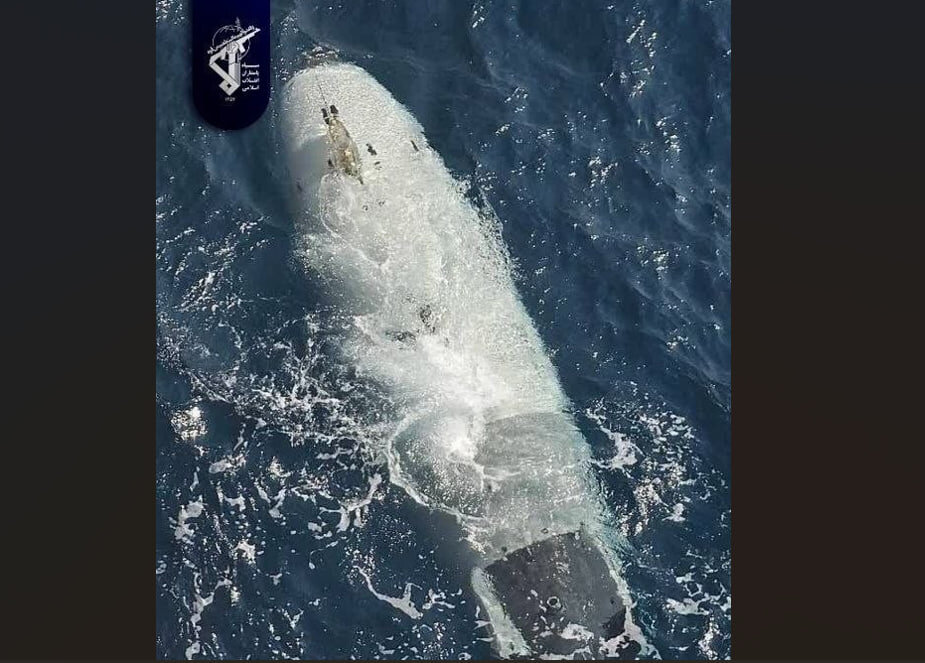
TEHRAN- Iran’s Islamic Revolution Guard Corps (IRGC) Navy said Tuesday that it had seized an advanced US unmanned underwater vehicle at the entrance to the Strait of Hormuz.
In a statement carried by Iranian state television, the IRGC said its naval forces had captured one of the most advanced autonomous and “smart” underwater systems in the US fleet. Tehran said the vehicle had entered service with the US military in 2025 and that images of the captured platform would be released.
The reported seizure would represent a significant development in the increasingly contested undersea domain around the Strait of Hormuz, where autonomous underwater vehicles (AUVs) are increasingly relevant to intelligence, surveillance and reconnaissance (ISR), seabed mapping, mine-countermeasure operations and monitoring of critical maritime infrastructure.
Iranian media identified the vehicle as Anduril’s Dive-LD, a large-displacement autonomous underwater vehicle designed for long-endurance operations. Anduril’s published specifications describe the platform as approximately 5.8 meters long and capable of operating autonomously for up to 10 days and reaching depths of about 6,000 meters. The system has a modular payload architecture, allowing it to be configured for different mission sets and sensor packages.
The Dive-LD is designed for missions including hydrographic surveying, intelligence collection, mine warfare, seabed reconnaissance, and inspection of subsea infrastructure such as pipelines and communications cables. Its deep-diving capability and modular architecture are intended to provide persistent undersea access without exposing a crewed platform to the operational risks associated with contested waters.
The US Navy received its first Dive-LD in April 2025 for Unmanned Undersea Vehicle Squadron 1, which develops and operates autonomous underwater systems for ISR and other naval missions.
The reported capture comes amid heightened military tensions in and around the Strait of Hormuz, a critical maritime chokepoint through which a substantial share of global energy supplies normally passes.
The incident could offer Iran access to sensitive information on an advanced US autonomous undersea platform, including its sensors, navigation architecture, communications systems, and mission-planning capabilities—making the reported seizure potentially significant beyond the immediate tactical episode.
Leave a Comment